
Running a medical clinic involves much more than providing patient care. Physicians and clinic managers must handle various processes that consume time and require constant attention and focus.
With the emergence of artificial intelligence, this reality is beginning to change, as new tools help reduce repetitive tasks, organize information, and increase team productivity.
In this article, you'll learn how to apply AI in clinic management, which processes can be optimized, and what to consider before adopting these technologies.
How is artificial intelligence transforming clinic management?
The application of artificial intelligence in healthcare goes beyond diagnosing diseases or interpreting medical examinations. It can also support operational activities such as clinical documentation, information organization, and administrative data analysis.
One example is the time spent on medical records. A study published in the Annals of Internal Medicine in 2016 found that physicians across four outpatient specialties spent approximately two hours on electronic health records and administrative tasks for every hour of direct patient care during office hours, in addition to performing further work outside regular working hours.
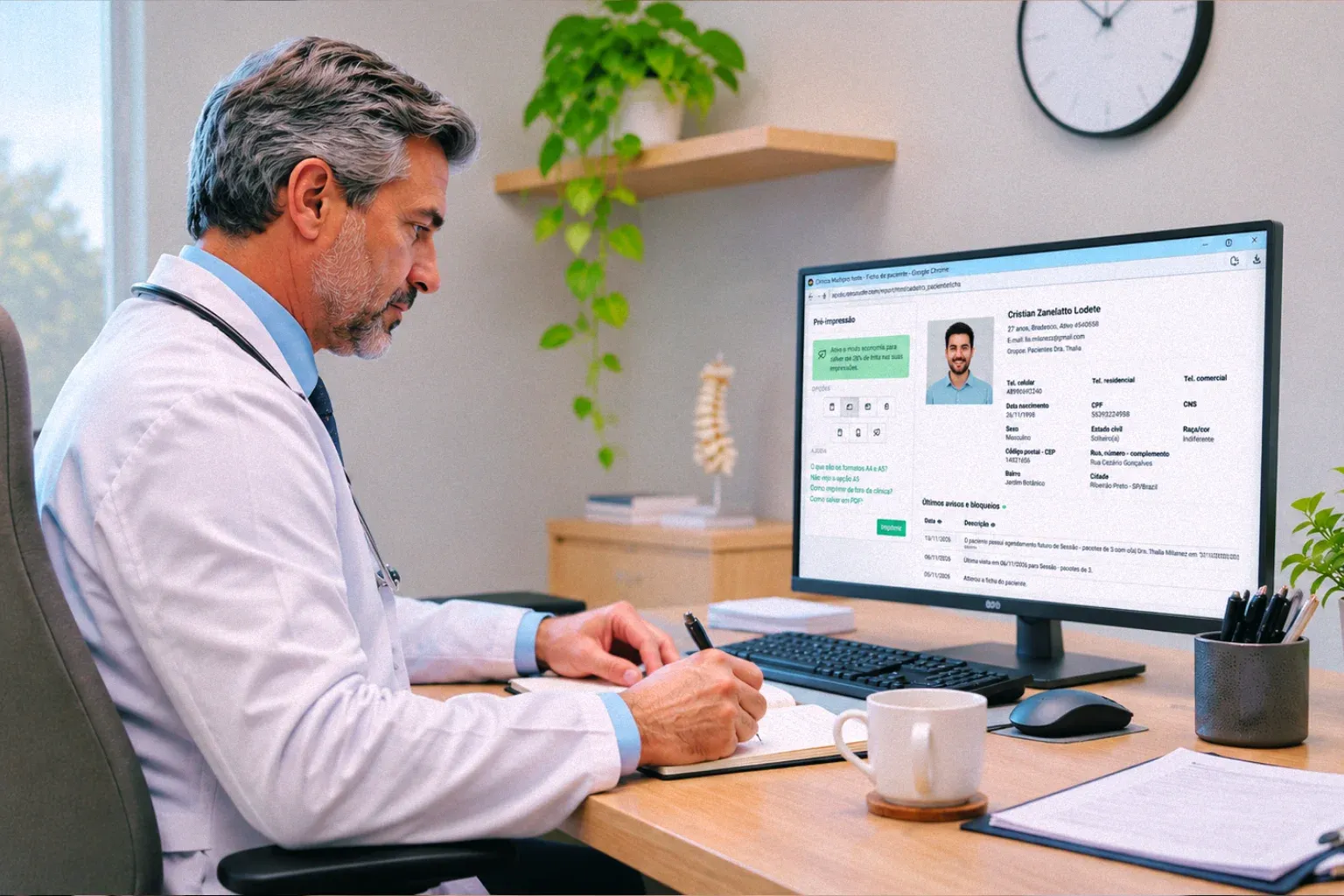
Although the study reflects a specific context, it highlights an ongoing challenge in healthcare: the documentation required for patient care can take up a significant portion of physicians' daily routines.
This is where AI-powered transcription tools, automation, and data analysis become increasingly relevant. When properly implemented, they help reduce operational tasks without compromising healthcare professionals' autonomy or responsibility for clinical decisions.
Common mistakes when implementing artificial intelligence in clinics
Adopting new technologies without evaluating existing processes can lead to additional costs and disappointing results. Some of the most common mistakes include:
- Automating disorganized processes: using AI without reviewing existing workflows may simply reproduce inefficiencies and create additional work.
- Adopting disconnected tools: solutions that do not integrate with the clinic's daily operations may increase the need to transfer information manually.
- Overlooking data security: healthcare information includes sensitive personal data and requires specific privacy and protection measures.
- Skipping human review: AI-generated transcripts, summaries, and other information may contain errors and require professional validation.
Technology should be selected based on an identified operational problem, rather than simply on the availability of new features.
Practical applications of artificial intelligence in clinic management
1. Consultation transcription and medical record optimization

During a consultation, physicians need to listen to patients, assess symptoms, analyze information, and document the encounter. Constantly switching between conversation and medical record entry can disrupt the natural flow of the interaction.
AI-powered clinical documentation tools help reduce this effort by converting conversations into text and organizing information for review.
One such tool is Ninsaúde Safe, developed to support patient consultations and medical record documentation by using AI to record and transcribe consultations. This allows healthcare professionals to focus more on interacting with patients while using the transcription as support* for clinical documentation.
*AI-generated content must still be reviewed by the physician before being incorporated into the medical record, especially when it involves symptoms, medications, or patient treatment decisions. No AI system has the professional qualifications or credentials to override a healthcare professional's clinical judgment.
2. Productivity in administrative activities
In addition to medical documentation, AI can support administrative tasks that require frequent information processing.
Potential applications include categorizing incoming requests, organizing messages, and preparing operational summaries. In clinics with multiple healthcare professionals, these applications can help teams prioritize demands and reduce repetitive tasks.
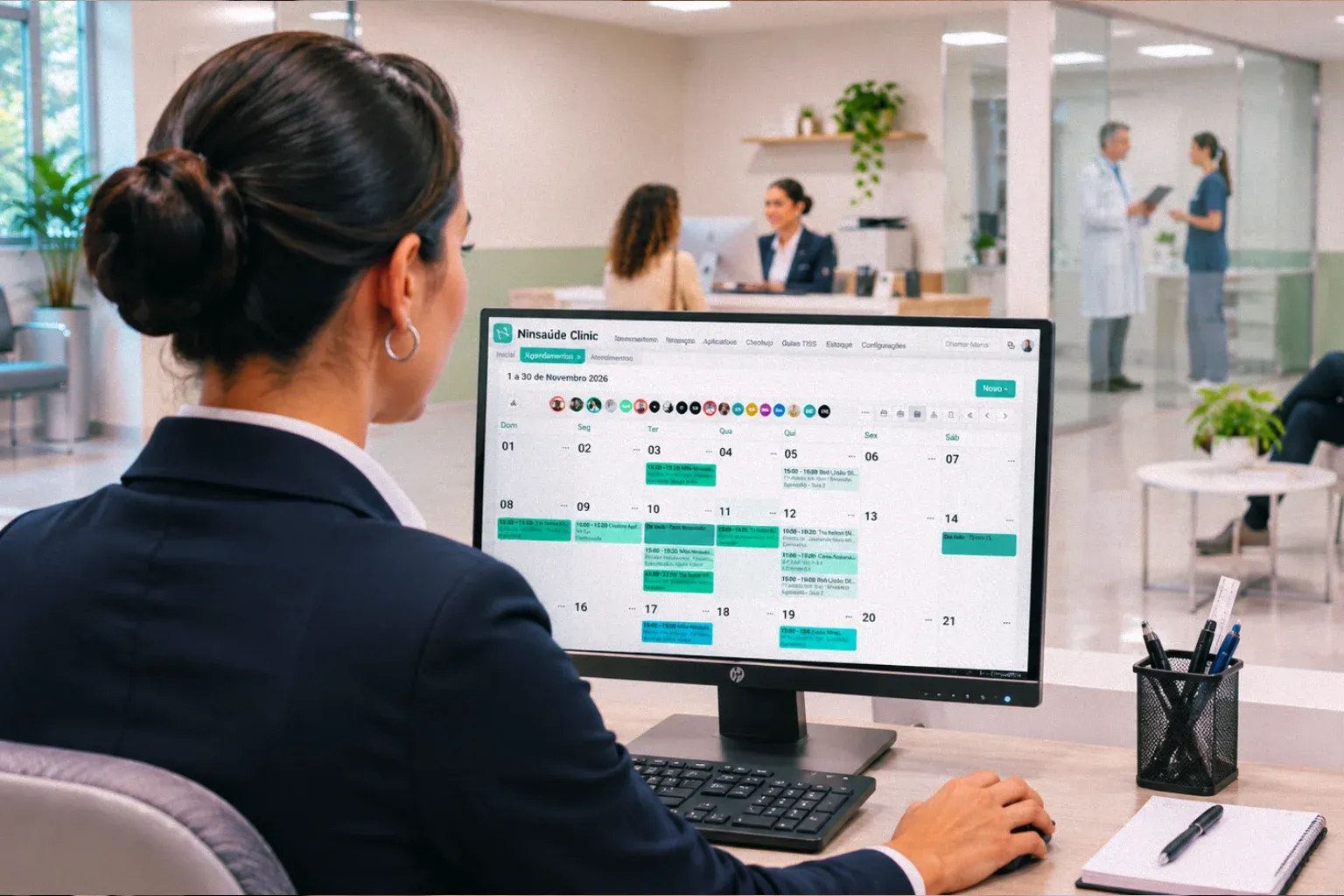
However, the benefits depend on data quality and integration with existing processes. An AI tool alone cannot replace a well-structured clinic management system.
3. Data analysis to support management decisions
Clinics that monitor operational and financial indicators can identify potential problems earlier.
Artificial intelligence can be used to analyze historical data, identify patterns, and support forecasting, provided that sufficient reliable data is available.

For example, analytical models can help identify periods with higher patient no-show rates or forecast demand for specific appointment times. For these analyses to be useful, scheduling, patient care, and financial information must be properly organized.
Ninsaúde Clinic supports this structure by bringing administrative, clinical, and financial processes together in a single platform. This integration makes it easier to monitor performance and provides a more organized foundation for management decisions.
Quick summary: where can AI add value to a clinic?
- Patient care: less manual effort in documenting consultations.
- Administrative operations: support for organizing and completing repetitive tasks.
- Strategic management: information analysis to identify patterns and opportunities for improvement.
What is the impact of AI on productivity and financial management?
The benefits of artificial intelligence can extend across different areas of a clinic, but they must be evaluated using measurable indicators.
In terms of physician productivity, reducing the time spent on documentation can free up part of the workday for patient care activities. This does not necessarily mean increasing the number of consultations, but rather enabling a more efficient allocation of time.
In financial management, better-organized processes help clinics understand operational costs and identify opportunities for improvement. The return on investment of an AI tool should account for its cost, the time actually saved, and any expenses related to review and maintenance.
Regarding patient experience, the appropriate use of technology can contribute to consultations with fewer administrative interruptions, allowing healthcare professionals to remain focused on their patients.
The main benefit comes from combining technologies that support patient care with management practices capable of monitoring results.
The next step toward a more efficient clinic
Artificial intelligence presents an opportunity for clinics looking to modernize their operations, but its value goes beyond simply automating tasks. It lies in helping professionals make better use of their time, keeping information more consistently organized, and enabling managers to make informed decisions.
To achieve this, it is important to combine specialized tools, such as Ninsaúde Safe, with an integrated management platform, such as Ninsaúde Clinic.
Can your clinic already identify how much time is spent on tasks that could be simplified?

Did you find this information helpful?
Keep following our blog for more content about healthcare management, medical marketing, and healthcare innovation.
Are you a healthcare professional who hasn't discovered Ninsaúde Clinic yet? Learn how the platform can optimize your processes and help improve the quality of patient care.
